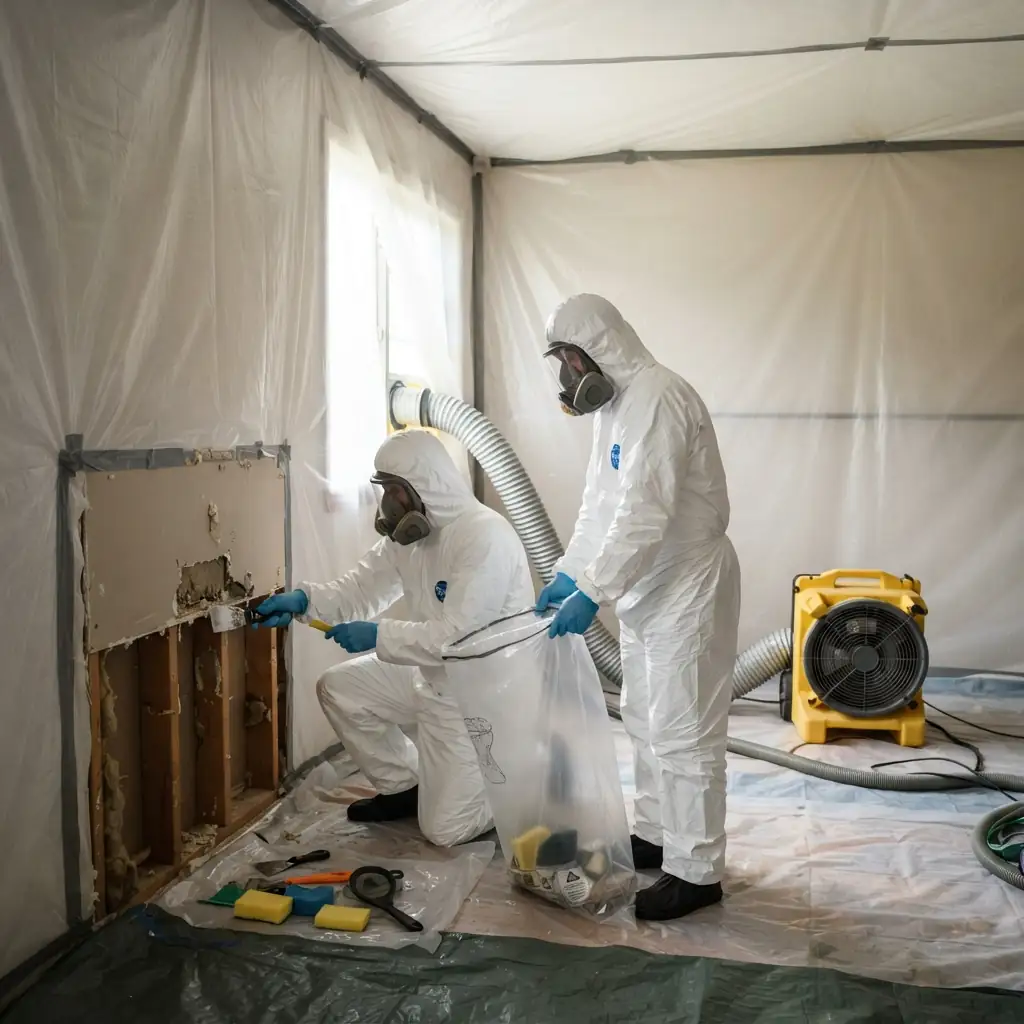
Toxic mold is a phrase that shows up in a lot of headlines, and it can make a mold problem in a Columbia home feel frightening. In practice the term is not a lab category, and the cleanup follows the same careful steps used for any significant growth. We connect you with an independent local provider who can explain what they see, plan the abatement and keep the work contained.
What People Mean by Toxic Mold
Some molds can produce substances called mycotoxins under certain conditions. Toxic mold is a popular name for those molds, most often Stachybotrys. But the same mold may or may not produce them, and you cannot tell by looking. For a homeowner, the useful questions are the same as with any mold: how much is growing, where and why. Those answers drive the cleanup plan.
Health Questions Go to a Doctor
Mold can affect people differently. Those with asthma, allergies, lung conditions or a weakened immune system may be more sensitive. If someone in the house has symptoms you think are related to mold, talk with a doctor. A mold provider can explain the cleanup but should not give medical advice. Until the work is done, it is sensible to limit time in the affected area and keep sensitive people out of it.
How Abatement Is Done
Mold abatement is another word for contained removal. The provider fixes or plans the fix for the moisture source, seals the work area with plastic sheeting, runs a HEPA air scrubber, removes porous materials that have grown mold and cleans the remaining surfaces. Workers wear protective gear and bag debris before it leaves the zone. A final check confirms the area is clean and dry before repairs.
Planning Toxic Mold Removal in Columbia
Share where the growth is, how large it looks and whether anyone in the household is especially sensitive. That helps the provider plan containment and timing. Ask for a written scope that describes the containment, removal, cleaning and final check, so you know exactly how the work will be handled.