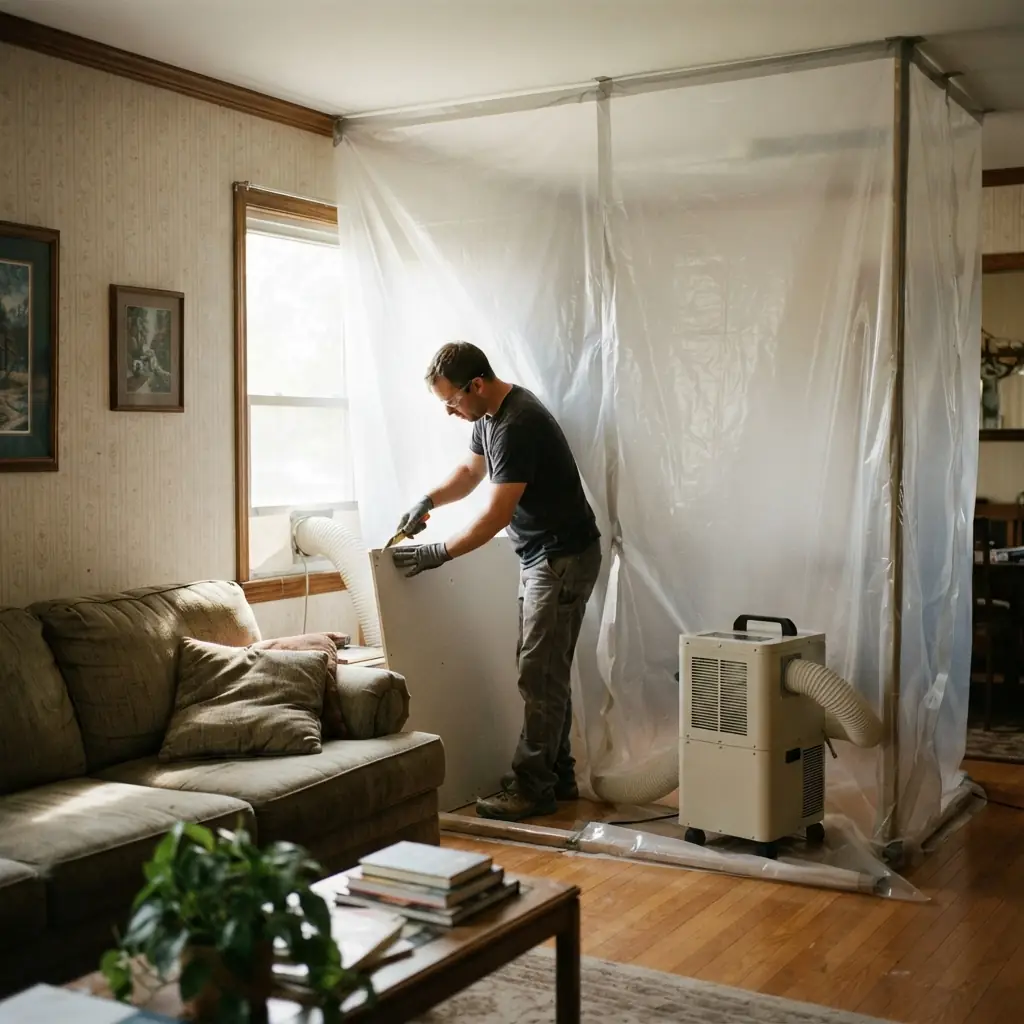
Remediation is the word you will see on most proposals in Columbia, and it means more than removal alone. It covers the whole job: controlling the moisture, keeping spores inside the work area, cleaning or removing what is affected and bringing the space back to a normal condition. We connect you with an independent local provider who can walk the house, write a clear scope and answer questions before work starts.
What Remediation Adds to Basic Cleanup
Cleanup alone deals with what you can see. Remediation looks at the whole system around it. That means a moisture check of nearby walls and floors, a plan for keeping dust and spores out of living spaces, decisions about what can be cleaned and what has to go, and a final check of the area. On many Columbia jobs the scope also notes the repair needed to stop the water, such as a gutter extension, a plumbing fix or a new bath fan duct, even when another trade will do it.
Sheeting, Negative Air and Clean Zones
Disturbing moldy material releases spores. To keep them from drifting into the rest of the house, crews hang plastic sheeting around the work area and run an air scrubber with a HEPA filter that pulls air out of the zone. Doorways may get zippered openings, and HVAC vents in the room are usually covered. Workers bag debris before it leaves the zone. These steps are what separate remediation from a quick wipe-down, and they are worth asking about by name.
Judging a Remediation Scope
A fair scope lists the rooms, the square footage, the containment setup, the materials coming out, the cleaning method for what stays, the drying plan and how the result will be checked. If a proposal only says remove mold, ask for those details in writing. Two quotes can look far apart simply because one includes containment and testing and the other leaves them out.
Planning Mold Remediation in Columbia
Start by gathering what you know: where the growth is, when it appeared and what water problems the house has had. Share photos if you have them. A provider can then visit, measure and put the plan in writing. Read it line by line, ask what each step is for and make sure the moisture source is covered before you agree to a start date.