Few phrases cause more worry than toxic mold. Headlines and online forums can make it sound like any dark spot is an emergency. Here is a calmer look at what the term means and how a Columbia household can respond sensibly.
Official source
For a plain summary of how mold exposure can affect sensitive people, read the EPA page Mold and Health.
Is toxic mold a real thing?
Some molds can produce mycotoxins under certain conditions, and toxic mold is a common name for them. But it is not a lab category, and you cannot tell by looking. Any significant indoor mold should be cleaned up carefully and its moisture source fixed, whatever it is called.
Related service >>
- Toxic Mold Removal in Columbia, MO
Where the Phrase Comes From
Some molds can produce substances called mycotoxins under certain conditions. Toxic mold became a popular label for those molds, especially Stachybotrys. But the label is not a lab category. The same species may or may not be producing mycotoxins at a given time, and there is no way to tell by looking. For cleanup purposes, any significant indoor mold is handled with care.
Health Questions Belong With a Doctor
Mold affects people differently. Allergies, asthma, other lung conditions and weakened immune systems can make some people more sensitive. If someone in your home has symptoms you think may be related to mold, talk with a doctor. A mold provider can explain the cleanup but should not diagnose or give medical advice.
What Abatement Looks Like
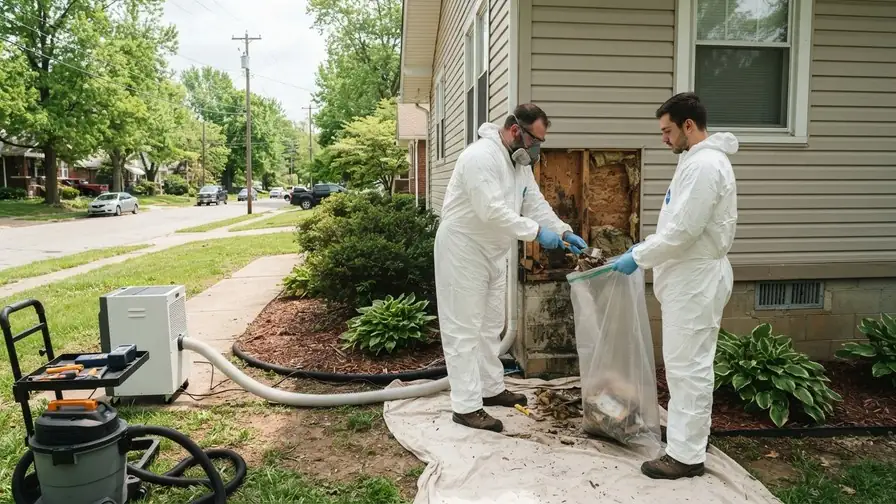
Abatement simply means contained removal. The moisture source is addressed, the area is sealed with plastic sheeting, a HEPA air scrubber filters the air, porous materials with mold are removed and bagged, and remaining surfaces are cleaned. Workers wear protective gear. A final check confirms the space is clean and dry before repairs.
Responding Calmly and Thoroughly
The right response to any significant mold problem is the same: find the moisture, contain the area, remove what cannot be cleaned and confirm the result. If you are worried about health, involve a doctor. If you want to know the species, a lab sample can tell you, but it will rarely change the cleanup plan.