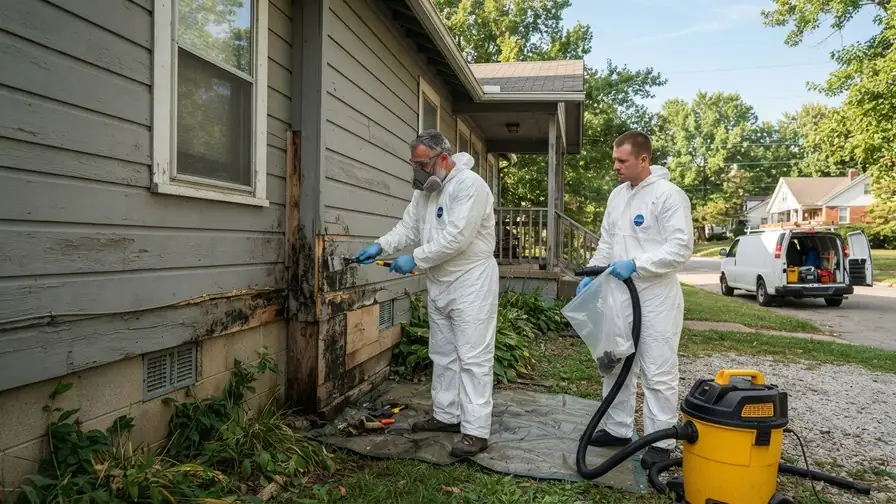
Finding dark spots on a wall can send anyone to a search engine, and the results are often frightening. Before you panic, it helps to know what color can and cannot tell you about mold in a Columbia home.
Official source
The EPA covers how mold can affect health and who is more sensitive in Mold and Health.
How can I tell if mold on my wall is black mold?
You cannot tell by looking. Many molds are dark, and only a lab sample can identify the species. For planning the cleanup, the size of the area and the material it is on matter more than the species name.
Related service >>
- Black Mold Removal in Columbia, MO
Many Molds Look Dark
Dozens of common indoor molds form dark green, gray or black colonies. Cladosporium and Aspergillus can both look dark, as can Stachybotrys, the one most people mean by black mold. Lighting, the surface underneath and the age of the colony all change how it looks. You simply cannot identify a mold by eye, and two patches that look alike can be different species.
What Actually Sets the Cleanup
Cleanup depends on three things: how big the area is, what material the mold is on and what is keeping it wet. Mold on a hard, non-porous surface like tile or metal can usually be cleaned. Mold on drywall paper, ceiling tiles or carpet usually means the material has to be removed. Larger areas call for containment. The color does not change any of that.
Living With It Until It Is Fixed
Keep the door to the room closed if you can, avoid disturbing the growth and do not run fans that push air from that room into the rest of the house. Anyone with breathing problems should stay out of the space. If you are worried about health effects, a doctor is the right person to ask.
Focus on Size and Cause
Take a photo, estimate the size of the patch and think about what water might have reached that spot. Those details, not the color, are what a provider needs to plan the right cleanup. If you want to know the species for peace of mind, a surface sample can tell you.