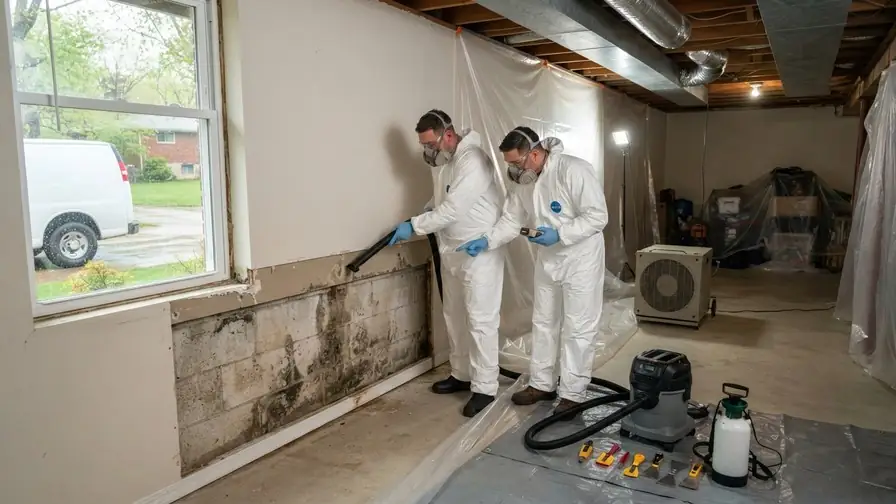
In Columbia, the heaviest rain usually falls in the second half of spring, the same stretch when severe storms are most common. That is when many basements first show signs of trouble. Here is how water gets in, what it means for finished spaces and how to keep mold from following.
Official source
The EPA's humidity and cleanup advice for homes is in Mold Cleanup in Your Home.
Why does my Columbia basement get wet in spring?
Late spring brings the heaviest and most frequent rain in Columbia. That rain saturates the soil, and water pushes through foundation cracks, floor joints and gaps around pipes, especially when downspouts drain next to the house.
Related service >>
- Basement Mold Removal in Columbia, MO
How Storm Water Finds the Basement
Heavy rain saturates the soil around the foundation. Water then pushes through cracks in the walls or floor, the joint where they meet, and gaps around pipes. Downspouts that empty right next to the house and soil that slopes toward the foundation make it much worse. Window wells without covers can fill and leak. After a big storm, walk the basement with a flashlight and look for damp spots and puddles.
Finished Basements Hide the Damage
When the walls are covered with drywall and the floor with carpet, water soaks the back side first. By the time a stain shows on the paint or the carpet feels damp, mold may already be growing behind it. A musty smell is often the first sign. Moisture readings along the bottom of the walls can show how far the water reached.
Habits That Keep It Dry
Extend downspouts several feet from the house and keep gutters clear. Make sure soil slopes away from the foundation. Run a dehumidifier in summer to keep humidity below about 50 percent, as the EPA recommends. Test the sump pump before spring if you have one. Store boxes on shelves instead of on the floor.
After the Next Big Storm
Make a habit of checking the basement after heavy rain. If you find water or smell mustiness, dry it out quickly and look for the entry point. If water keeps returning or the walls are finished, ask for an inspection before mold has a chance to spread.