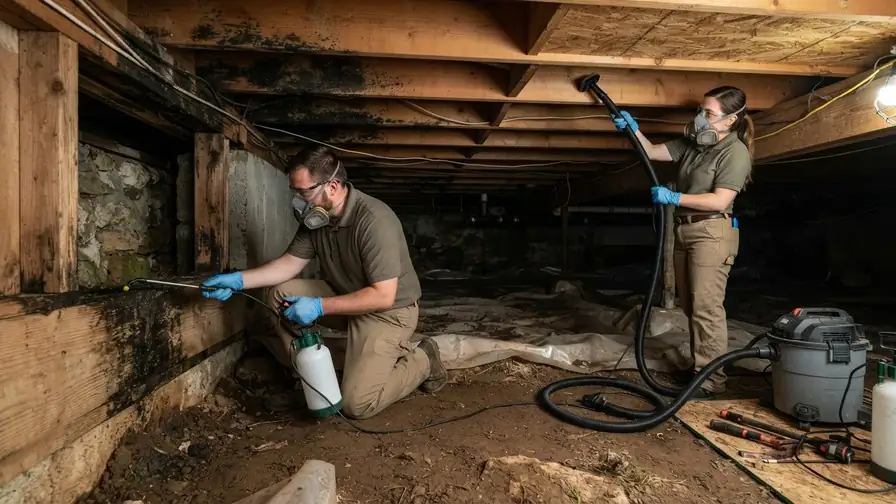
The crawl space is the part of the house most people never see, which is exactly why mold can grow there for years unnoticed. For homes around Columbia, it is worth knowing what goes on under the floor and what fixes actually last.
Official source
The EPA explains how moisture control prevents mold throughout a home in Ten Things You Should Know About Mold.
How do I know if my crawl space has mold?
Common signs include a musty smell in rooms above the crawl space, soft or cupped floors, sagging insulation and high indoor humidity in summer. An inspection with photos is the easiest way to confirm it without crawling in yourself.
Related service >>
- Crawl Space Mold Removal in Columbia, MO
Signs You Can Notice From Upstairs
You do not have to crawl in to suspect a problem. A musty smell that is stronger in rooms over the crawl space, floors that feel soft or bouncy, cupping in wood floors, more insects than usual and high humidity indoors in summer can all point to moisture below. Sagging or fallen insulation between the joists is another clue if you peek in from the access door.
Where the Moisture Comes From
Bare soil gives off moisture all the time. In summer, humid outdoor air drifts in through vents and condenses on the cooler wood. Rain that drains toward the foundation can leave puddles. Plumbing and ductwork that run through the crawl space can drip or sweat. Put those together and the joists, sill plates and subfloor stay damp for long stretches.
Fixes That Last
Cleaning the wood is only half the job. Lasting results come from cutting off the moisture: a heavy plastic vapor barrier over the soil, sealing or adjusting vents, a dehumidifier in some homes, and gutters and grading that move rain away from the house. If water pools after storms, a drain or sump pump may be needed. Ask the provider which of these your house needs and why.
Taking the First Look
If you notice the signs above, a crawl space inspection is a sensible next step. Ask for photos so you can see what the provider sees. With those, you can weigh the cleanup and the moisture fixes and decide what to do first.