Whether it is a burst supply line, a failed sump pump or storm water coming under a door, finding water in your house is stressful. What you do in the first hours and days has a lot to do with whether mold follows. Here are the steps in order.
Official source
The EPA explains how to dry out and clean up after flooding in Flood Cleanup to Protect Indoor Air Quality.
What is the first thing to do when water floods my house?
Make sure it is safe: keep away from water near electrical outlets or the panel and call an electrician if needed. Then stop the source, such as shutting off the main water valve, and take photos before cleanup. Start drying as soon as it is safe to do so.
Related service >>
- Emergency Mold Remediation in Columbia, MO
Safety and Stopping the Water
If water is near outlets, cords or the electrical panel, stay out and call an electrician or your utility. Do not walk through standing water if power may be on. If the source is plumbing, shut off the main water valve. Know where it is before you need it: often in the basement near the front wall or by the water heater.
Document Before You Clean
Take photos and video of the water, the rooms affected and damaged belongings before you move or throw anything away. Note the date and time. If you plan to file an insurance claim, call your agent early and ask what they need. Keep receipts for fans, dehumidifiers and any help you hire.
Dry Early and Be Ruthless With Soaked Items
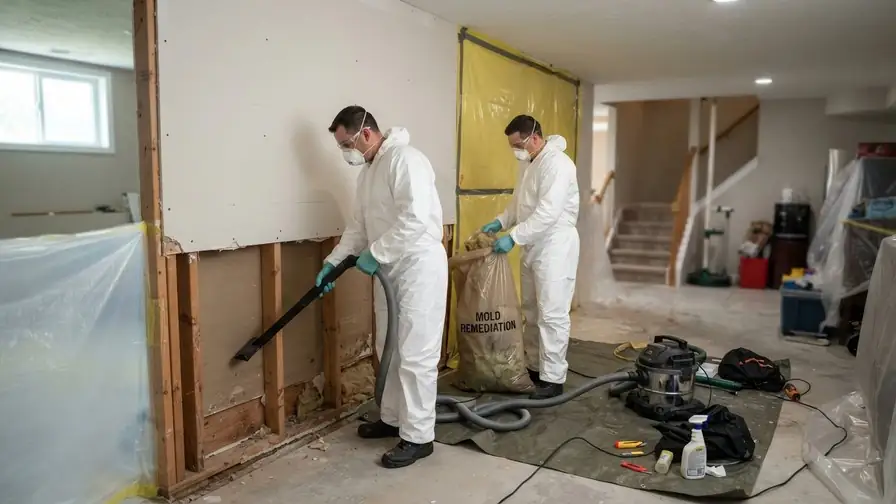
Open windows if the weather allows, run fans and dehumidifiers and pull up wet rugs. Mold can start on wet materials in a day or two. Soaked carpet pad, mattresses, upholstered furniture, cardboard and paper are usually not worth saving, especially after dirty or sewer water. Hard items can be cleaned and dried. Drywall and insulation that stay wet usually need to come out.
When to Call for Help
If more than a small area got wet, if water sat for more than a day or if the water was dirty, professional drying and a moisture check are worth it. A provider can measure what is still wet, remove what cannot be saved and help keep mold from taking hold.