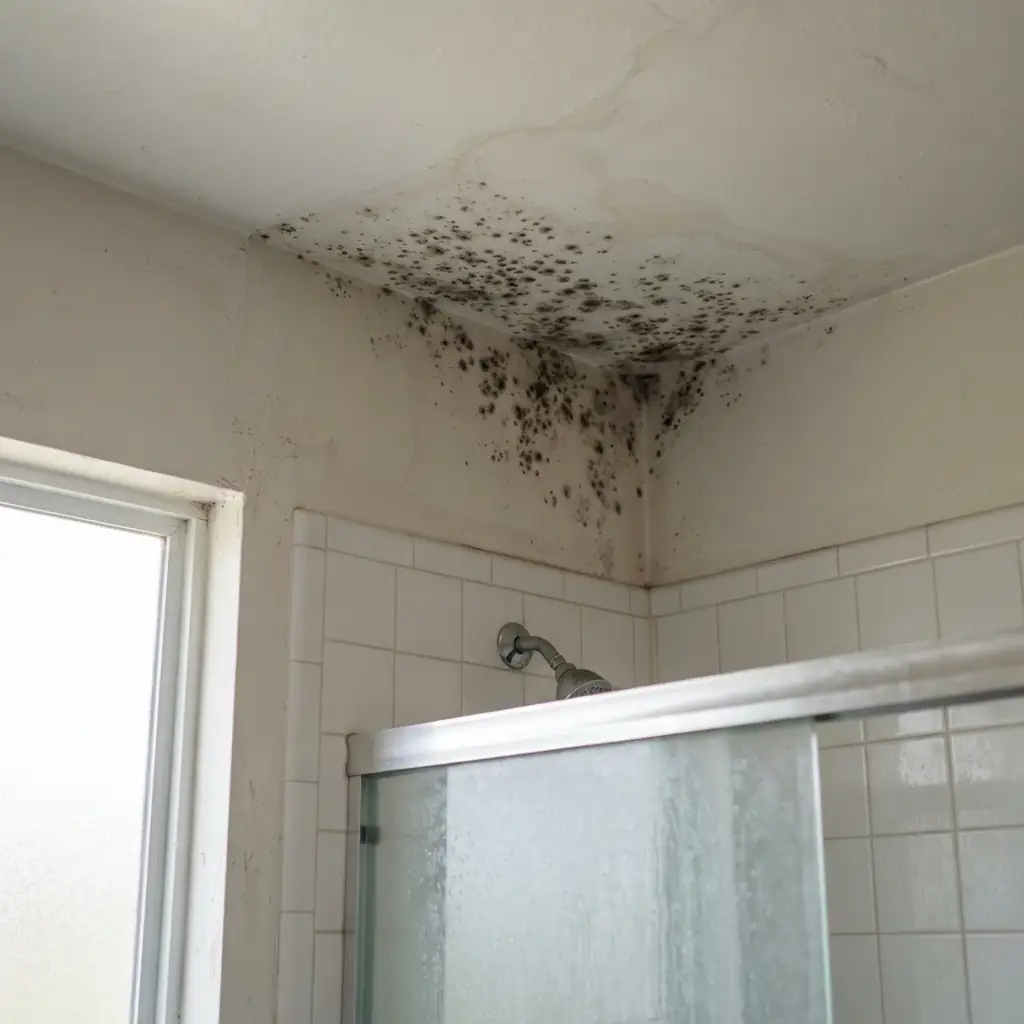
Every bathroom in Columbia sees some mold on grout or caulk. That is normal and usually cleans up. It becomes a remediation job when growth keeps coming back, spreads onto the ceiling or drywall, or shows up as soft spots and stains near the tub or toilet. We connect you with an independent local provider who can find what is feeding the growth and fix it properly.
Surface Spots or Something Deeper
Mold on grout lines, caulk and the shower curtain lives on soap film and moisture from daily showers. Regular cleaning and good airflow handle it. Warning signs of a bigger problem include growth that returns within days of cleaning, peeling paint on the ceiling, stains on the wall outside the shower, loose tiles, a soft floor near the toilet and a musty smell that does not fade. Those usually point to water getting behind the surface.
The Exhaust Fan Matters
A bathroom fan should move moist air outside during and after a shower. Many fans are too small for the room, too noisy to use or ducted into the attic instead of outdoors. Running a working fan for a while after each shower and leaving the door open helps the room dry. If the fan vents into the attic, fixing that duct is part of the solution, since it can cause attic mold too.
Finding Leaks Behind Tile and Tubs
Leaks from a shower valve, a failed shower pan, cracked grout or a loose toilet seal can soak the subfloor and wall cavity for months. The provider uses moisture readings around the tub, shower and toilet to find wet areas. Remediation may mean removing damaged drywall, backer board or subfloor, cleaning the framing and drying the area before a plumber or tile setter makes repairs.
Planning Bathroom Mold Remediation in Columbia
Before you send a request, note where the mold is, how often it returns after cleaning and whether the fan works. Mention any soft spots, loose tile or stains in the room below. That helps the provider decide whether this is a ventilation fix, a leak repair or both, and what the written scope should cover.