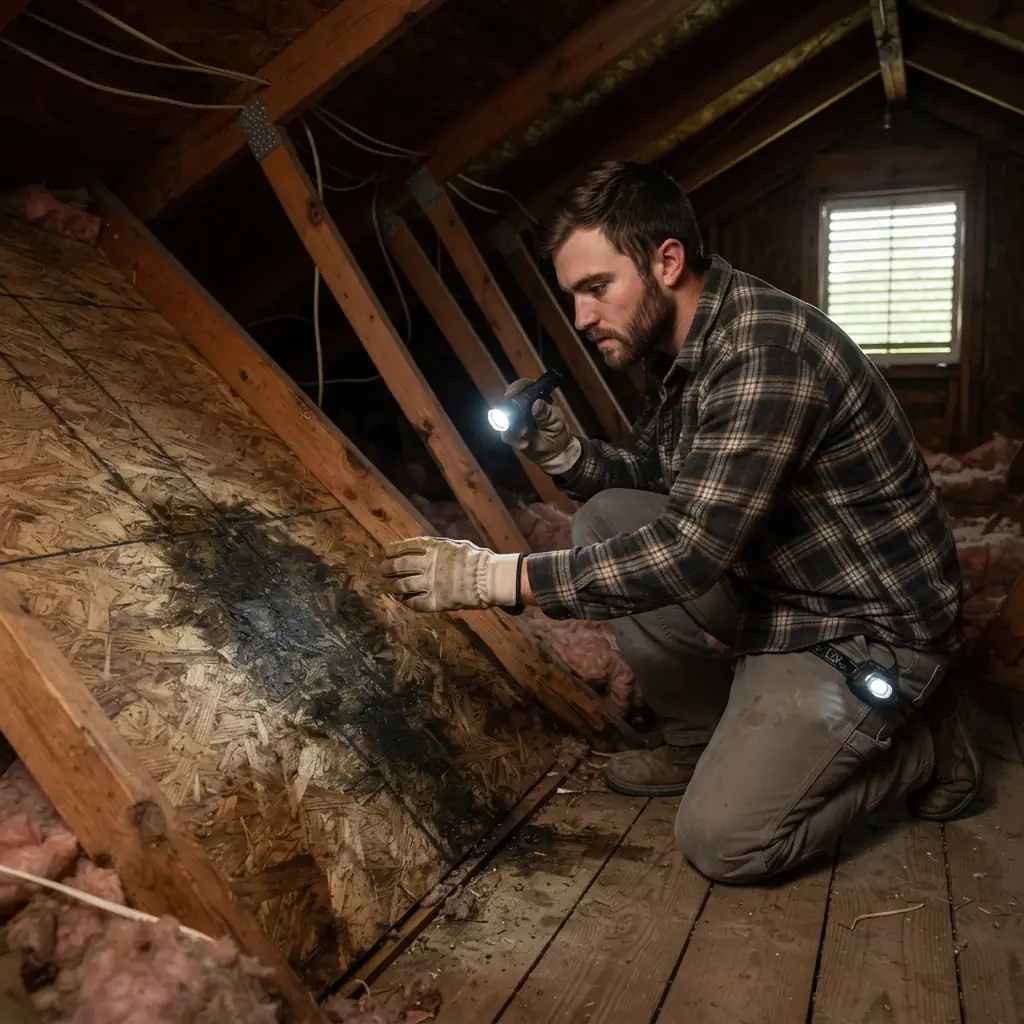
Attic mold in Columbia is often found by accident, during a roof estimate or a trip up to the storage boxes. Dark stains on the roof boards, frost on nails in winter and damp insulation are the usual signs. Most of the time the cause is moist house air, not a roof leak. We connect you with an independent local provider who can look at the attic, find the moisture source and explain the remediation plan.
How Attics Get Wet in Cold Weather
Columbia winters bring cold nights and snow, while the air inside a heated home holds more moisture. When that warm, damp air leaks into the attic through light fixtures, attic hatches and gaps around pipes, it meets cold roof boards and condenses. Over a season the sheathing can stay damp enough for mold to grow. Weak attic ventilation makes the problem worse because the moisture has nowhere to go.
Bath Fans and Dryer Vents in the Wrong Place
One of the most common causes is a bathroom fan that blows into the attic instead of through the roof or a wall. Every shower sends warm, wet air straight onto the roof boards. Kitchen and dryer vents that end in the attic do the same thing. Rerouting those ducts to the outside is often a small fix that matters more than the cleanup itself, and a good provider will point it out.
Cleaning the Decking and Dealing With Insulation
Remediation usually means sealing off the attic access, cleaning or treating the affected roof boards with HEPA vacuums and other methods named in the scope, and replacing any insulation that is wet or moldy. Sheathing that has rotted may need a roofer. Once the work is done, air sealing and better ventilation help the attic stay dry through the next winter.
Planning Attic Mold Remediation in Columbia
When you send a request, mention where the attic access is, what you have seen up there and whether any bath, kitchen or dryer vents might end in the attic. Photos from the hatch are helpful. The provider can then plan the visit and give you a written scope that covers both the cleanup and the moisture fix.