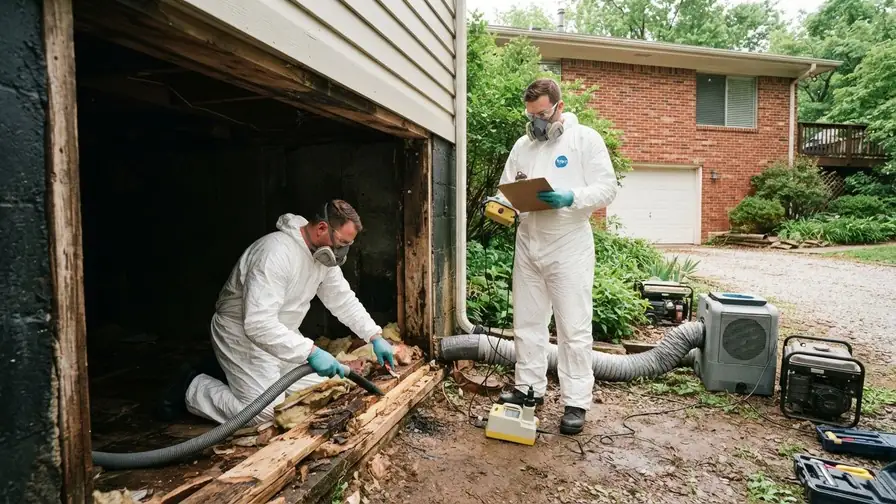
A remediation proposal can be one page or ten, and length alone tells you little. What matters is whether it explains the work clearly enough that you could check it was done. Here is what to look for when a proposal for a Columbia home lands on your table.
Official source
The EPA lays out the basic steps a mold cleanup should follow in What Are the Basic Mold Cleanup Steps.
What should a mold remediation proposal include?
It should list the rooms and square footage, the containment method, the materials to be removed, the cleaning method for surfaces that stay, the drying plan, debris handling and how the result will be checked. It should also say who fixes the moisture source and whether repairs like new drywall are included.
Related service >>
- Mold Remediation in Columbia, MO
The Lines Every Scope Should Have
Look for the rooms and approximate square footage, the type of containment, what materials will be removed, how remaining surfaces will be cleaned, the drying plan, how debris will leave the house and how the result will be checked. If the moisture source needs a repair, the proposal should say who does it. A missing line is not always a problem, but it is always worth a question.
Phrases That Deserve a Follow-Up
Wording like treat affected areas or apply antimicrobial as needed can mean many things. Ask which areas, which product and why it is needed. A line that says remove mold without saying what material comes out leaves room for surprises once a wall is opened. Ask how changes will be handled if the damage turns out to be larger than expected, and whether you will see the price before extra work starts.
Comparing Two Proposals
Lay them side by side and match the lines. One may include containment, testing and drying while another leaves them out, which explains a big gap in price. One may plan to remove drywall to four feet while the other plans two. Neither is automatically right, but the differences tell you what to ask each provider.
Signing With Confidence
A good proposal leaves you knowing what will happen, in what order and how you will know it worked. If you cannot answer those three questions after reading it, ask for clarification in writing before you schedule the work.